

The Future of B2B Sales: Why Agentic AI is the New Operating System for Growth
Key Takeaways
- B2B sales is shifting from seat-time to outcomes. Professionals no longer want to live inside software — they want autonomous systems that grow revenue for them.
- Agentic AI takes action, not just recommendations, using Large Action Models and RLHF to optimize for real-world results rather than predicting patterns.
- The market is moving fast — projected to reach $126.9 billion by 2029 at a 35% CAGR, with over $2 billion invested in agentic startups since 2022.
- Adoption is a 5-step journey: audit processes, choose outcome-focused tools, standardize data, pilot a niche use case, then monitor and optimize.
As we move through 2026, B2B sales is shifting from measuring success by "seat time" inside tools like Salesforce to measuring it by autonomous outcomes. Agentic AI — technology that takes real action on your behalf using Large Action Models and reinforcement learning — is becoming the new operating system for growth, working for you rather than requiring you to work for it. This shift is as fundamental as the move from on-premise servers to the cloud.
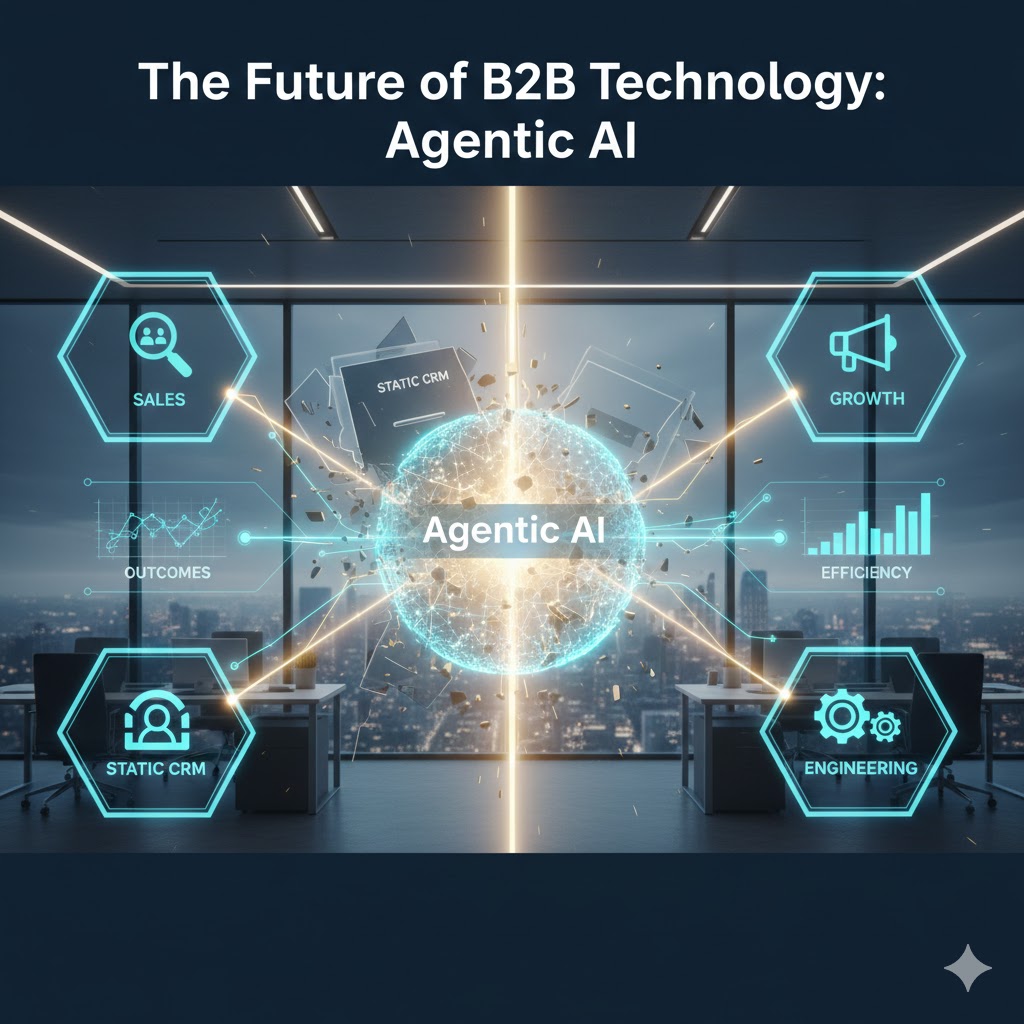
Historically, the success of a business application was measured by "seat time"—how long your team lived inside a platform like Salesforce. But as we move through 2026, the paradigm has shifted. Professionals no longer want to live inside software; they want to achieve organizational goals like growing revenue and operating more efficiently without the burden of manual data entry and repetitive logins.
The era of "application overload" is ending, making way for Agentic AI— a technology designed to work for you, rather than requiring you to work for it.
What is the shift from Generative to Agentic AI?
While Generative AI (like ChatGPT) has been beneficial for creating content, its impact is still tethered to human interaction—you have to drive the system. Agentic AI represents a fundamental shift: it is technology that takes autonomous action.
Unlike generative models that predict patterns, Agentic AI uses Large Action Models (LAMs) and Reinforcement Learning from Human Feedback (RLHF) to act on behalf of the user. It doesn't just make recommendations; it optimizes for actual results. This shift is as fundamental as the move from on-premise servers to the cloud. We unpack the distinction further in generative AI vs. agentic AI.
How big is the Agentic AI market impact?
The momentum behind Agentic AI is moving at a staggering pace:
-
Market Growth: The market is expected to reach $126.9 billion by 2029, growing at a CAGR of 35%.
-
Investment: Since 2022, over $2 billion has been poured into agentic startups.
-
Vertical Specialization: Unlike general AI, agentic platforms specialize in vertical-specific use cases—solving niche problems in sales, marketing, and engineering with proprietary datasets.
Why are sales professionals trading "inputs" for "outcomes"?
In a traditional Go-To-Market (GTM) strategy, sales teams are often bogged down by workflow interruptions. Agentic AI frees them from this "software tax" by managing routine, data-heavy tasks autonomously.
By deploying agentic systems — like an agentic SDR that owns the top of the funnel — organizations can:
-
Eliminate Manual Workflows: Agents navigate software platforms and manage customer queries without constant human prompting.
-
Focus on Strategic Decision-Making: Professionals can dedicate their time to complex problem-solving and building stronger client relationships.
-
Optimize Real-World Performance: These models learn from outcomes rather than static datasets, continually improving based on real-world results.
How do you prepare your organization? A 5-step adoption plan
The shift to Agentic AI requires rethinking tech stacks and organizational silos. To prepare for this future, follow this roadmap:
-
Audit current processes: Identify where manual data entry and repetitive logins are slowing your team down.
-
Choose and develop tools carefully: Focus on platforms that optimize outcomes rather than just adding more features.
-
Standardize your data: Build the proprietary datasets the AI needs to learn and optimize effectively.
-
Start with a pilot project: Tackle a niche problem first, such as lead generation, to prove the ROI.
-
Monitor, measure, and optimize: Use real-world performance data to continually refine your autonomous workflows.
The agentic future
Agentic AI is not a job replacer; it is an outcome optimizer. By moving away from clunky technology stacks and focusing on strategic thinking and meaningful customer engagement, B2B leaders can finally unlock the true potential of their teams.
The future of B2B technology isn't just about "better software"—it's about autonomous systems that drive revenue while you focus on what truly matters. If you're ready to trade seat-time for outcomes, talk to us about deploying an agentic AI workforce or explore our agentic SDR as your starting pilot.
Further reading: The Future Of B2B Technology: How Agentic AI Can Optimize Outcomes (Forbes Tech Council).
Frequently Asked Questions
Find the answers here to your most pressing questions.
Agentic AI is technology that takes autonomous action on behalf of a user to optimize outcomes, whereas Generative AI requires constant human interaction to create content. While you must drive Generative AI, Agentic AI works for you by executing tasks independently using Large Action Models and reinforcement learning from real-world results.
Professionals are experiencing application overload and want to escape manual data entry, repetitive logins, and workflow interruptions. Instead of measuring success by seat time inside a CRM, organizations want technology that works autonomously to help them achieve real goals like growing revenue and improving customer service.
Its capabilities are fueled by Reinforcement Learning from Human Feedback (RLHF), which lets models learn from real-world outcomes and continually improve based on performance. This optimizes for actual results rather than predicted patterns, making it powerful for routine, data-heavy tasks like lead generation or resolving customer tickets.
The market for agentic AI is projected to reach approximately $126.9 billion by 2029, reflecting a compound annual growth rate of 35%. Industry experts suggest its impact on automation will be as significant as the transition from on-premise computing to the cloud.
Agentic AI introduces new security concerns, such as applications autonomously logging into other systems, and challenges the level of trust managers must place in independent decision-making. It forces organizations to rethink their tech stacks and organizational silos, moving from bolting AI on to reimagining processes with agents at the core.